

Turning challenges into change: our sustainability journey in Morocco
When the rain doesn’t come, and the sun burns hotter than ever, farming becomes a race against time. In Morocco, these challenges are real — and they’re reshaping the way we grow. Climate change isn’t just a headline ; it’s something farmers feel in their soil every day. Rising temperatures, unpredictable weather, and water scarcity threaten the future of agriculture and impact livelihoods of the local communities. At Crop’s, we believe that every challenge is an opportunity to innovate and to protect what matters most: our people, our lands, and our planet.

Smarter water, sweeter results
Water is precious. Every drop counts. That’s why all our farmers use drip irrigation, a technique that saves water and nurtures crops efficiently. Drip irrigation is supported by Morocco’s Green Plan since 2008. This method is only the beginning of responsible water usage within strawberry farming.
One of our farm managers, Kenza, is also running groundbreaking trials on this topic. She's examining if strawberry plants can thrive with less water, and if so, does the fruit quality improve under water stress? Early results are very promising - water stress (20%) doesn't hurt plant development or yields, but it does boost sweetness and firmness. Less water, better berries. Next step is to scale this project up, and share the knowledge across the farms.
Protecting biodiversity
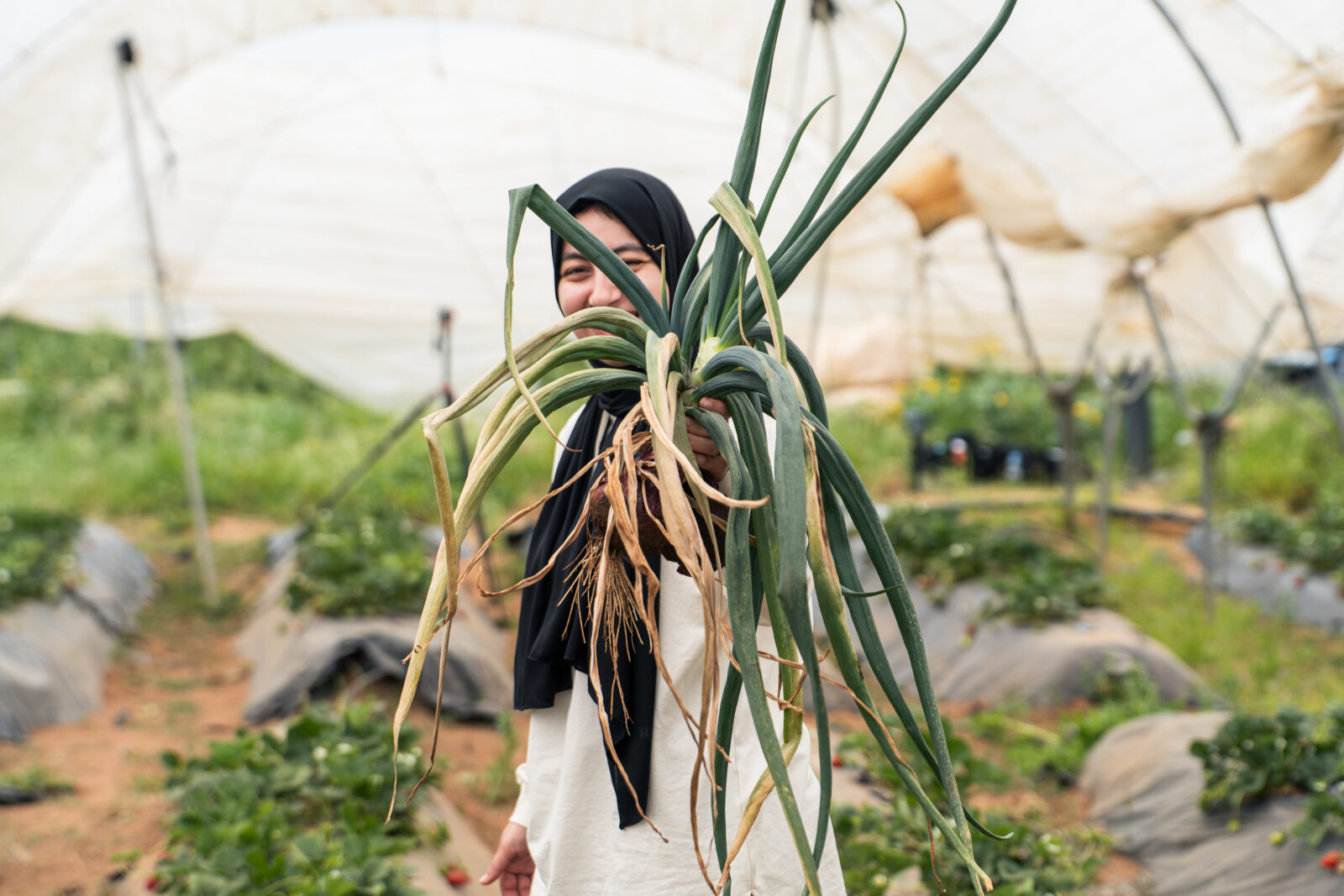
Sustainability also means protecting ecosystems and prioritising Integrated Pest Management (IPM). Our farmers plant companion crops like onion and release beneficial insect to deter and eliminate pests to reduce the use of chemical solutions. Those are always the last resort, and are submitted to strict guidelines. We share approved lists with our farmers every season, monitor compliance, and test every incoming batch to ensure safety and quality.


Fighting waste & recycling plastics
At the factory, we minimise food waste by accepting fruits with minor imperfections that can be trimmed or cut away. Parts of the strawberries that are not frozen for human consumption, such as the calyces, are repurposed for animal feed. In addition, most water that is used in the factory, is filtered by plants and used to irrigate nearby fields.
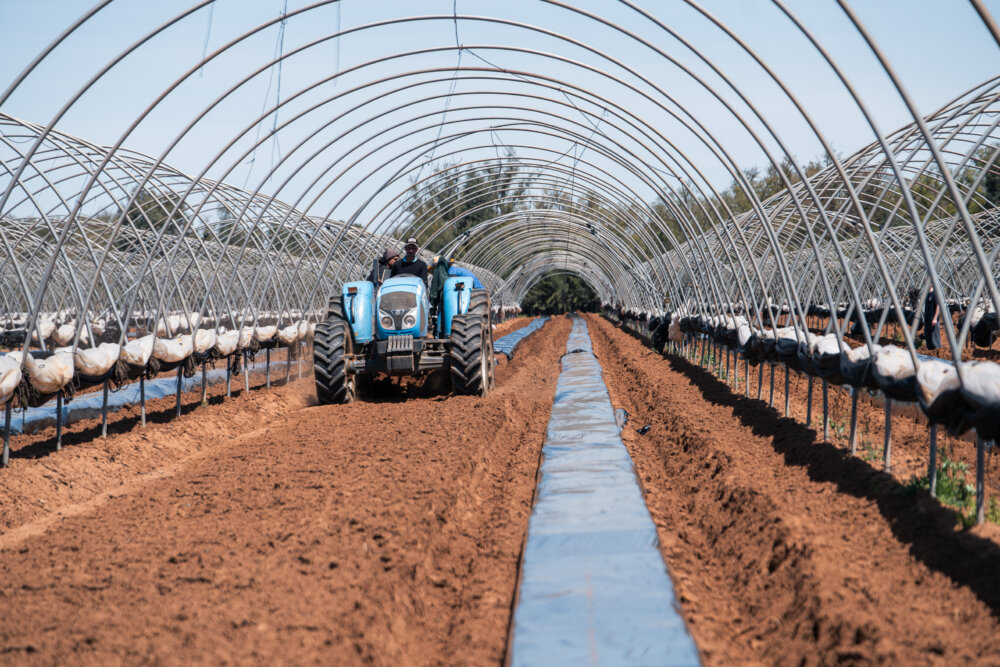
The metal tunnel structures are used up to 12 years, and the transparent cover plastics are reused by Moroccan banana growers. Since 2017, we're living by the Zero Strawberry Mika Project. Through the initiative, we've managed to collect and recycle over 880 tons of black plastic for soil covering and irrigation pipes.
These efforts reduce environmental impact and create circular solutions for agricultural materials.
Sustainable partnerships
At Crop’s, we believe sustainability starts with strong, responsible partnerships. Our commitment goes beyond sourcing – it’s about building long-term relationships that empower farmers and strengthen communities. We work closely with a diverse network of growers, from large certified farms to smallholders who need guidance and support. By maintaining this balance, we ensure sustainable purchasing and create shared value across the supply chain.
Our role is not just transactional. We invest in farmer education, technical training, and awareness programmes on hygiene, crop care, and first aid. These initiatives help farmers adopt best practices, improve yields, and safeguard both people and the environment. Through fair wages, social benefits, and continuous training, we support workers and their families. We also contribute to local development by renovating schools, sponsoring sports teams, and organising community projects. These efforts reflect our belief that sustainability is about people as much as it is about products.
Together with our partners, we aim to create a future where agriculture thrives responsibly – for the land, for the farmers, and for generations to come.


This article highlights how IQF rapidly freezes food to preserve freshness, texture, and nutrients, and covers the process, benefits over traditional freezing, and innovations like energy efficiency and expanded applications. It emphasizes IQF's role in reducing waste, enhancing food safety, and supporting sustainability, while addressing challenges like costs and fruit-specific adaptations.


