How foodservice restaurants are structuring cold breakfast menus in 2026-2027
What started with smoothies and yoghurt-based breakfast formats has expanded into a broader category of quick, flexible, and assembly-based morning options. For operators, this shift is not about trends, but about throughput, labour efficiency and ticket growth. The focus is on formats that are fast to assemble, easy to standardise, and flexible enough to adapt to changing demand – all without adding complexity in the kitchen. Looking ahead to 2026–2027, this evolution continues. Ingredients are no longer selected purely for taste, but for how they perform across multiple formats and service moments.

Moving beyond single-format thinking
Cold breakfast used to mean smoothies or yoghurt. Today, foodservice restaurants are building structured ranges with a limited number of formats, each with a clear role.
Instead of adding more products, the focus shifts to using one base across multiple outputs:
- Drinkable formats → speed and portability
- Spoonable formats → higher perceived value
- Hybrid formats → balance between convenience and substance
The goal isn’t variety for the sake of variety, but is to cover different consumption moments while keeping operations simple.
What drives format choices?
In practice, operators are asking:
- Can this be prepared in seconds during peak hours?
- Does is require minimal training for staff?
- Does it work for both dine-in and grab-and-go?
- Can it increase ticket value without increasing complexity?
This is where cold breakfast formats are evolving. Smoothies and yoghurt remain core, but there is clear growth in smoothie bowls, layered cups, and spoonable fruit-based formats. These formats respond to two key needs: operational simplicity (no cooking, fast assembly, consistent output) and higher perceived value (something that feels like a meal).
5 formats. 1 base. Clear roles.
To illustrate how this works in practice, we built a format system. The principle: one preparation logic, multiple outputs with different business functions. A good example of this is Açaí Kick, which is designed to act as a format-ready base across multiple outputs.
This type of setup — one base used across multiple formats — is increasingly how operators structure their breakfast offer today.

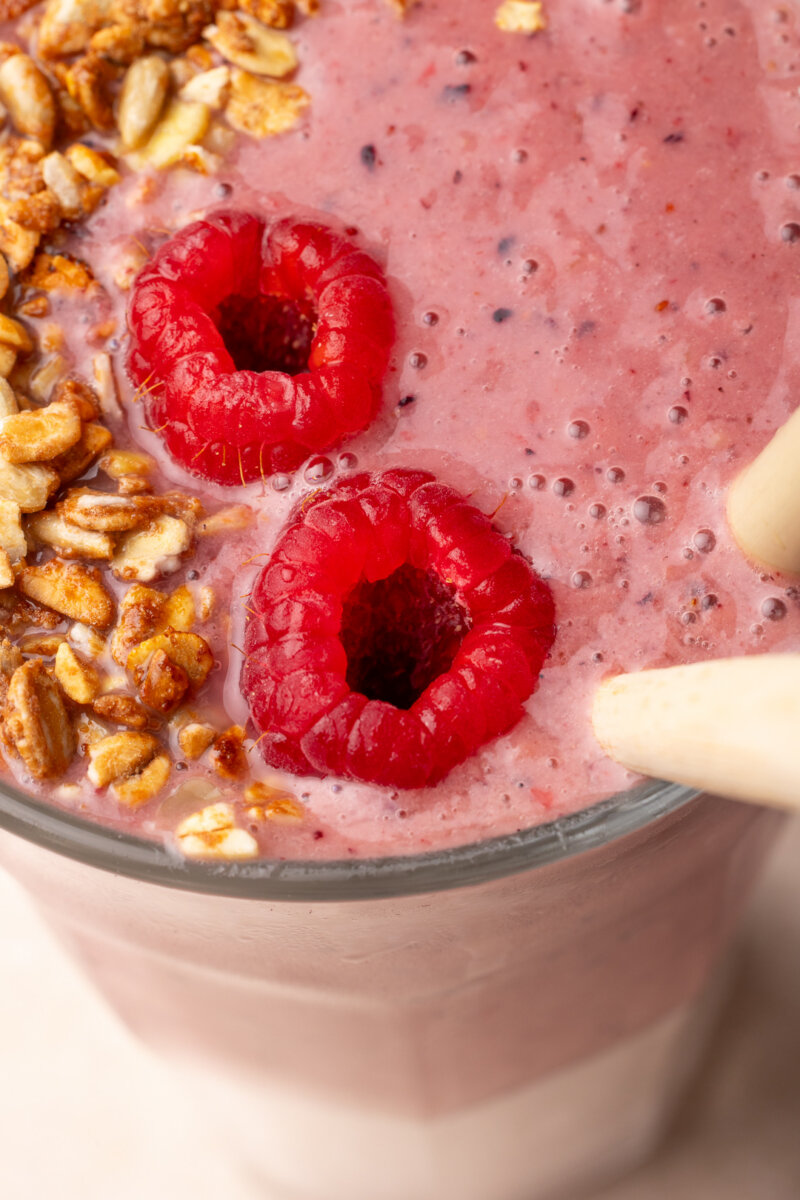
2 Breakfast bowl
Role: value & differentiation
Format: thick, structured
Use case: dine-in or premium takeaway
Transforms the same base into a higher-value meal. Toppings create upsell opportunities and can significantly increase ticket size.
Best for premium breakfast concepts, health-focused locations.

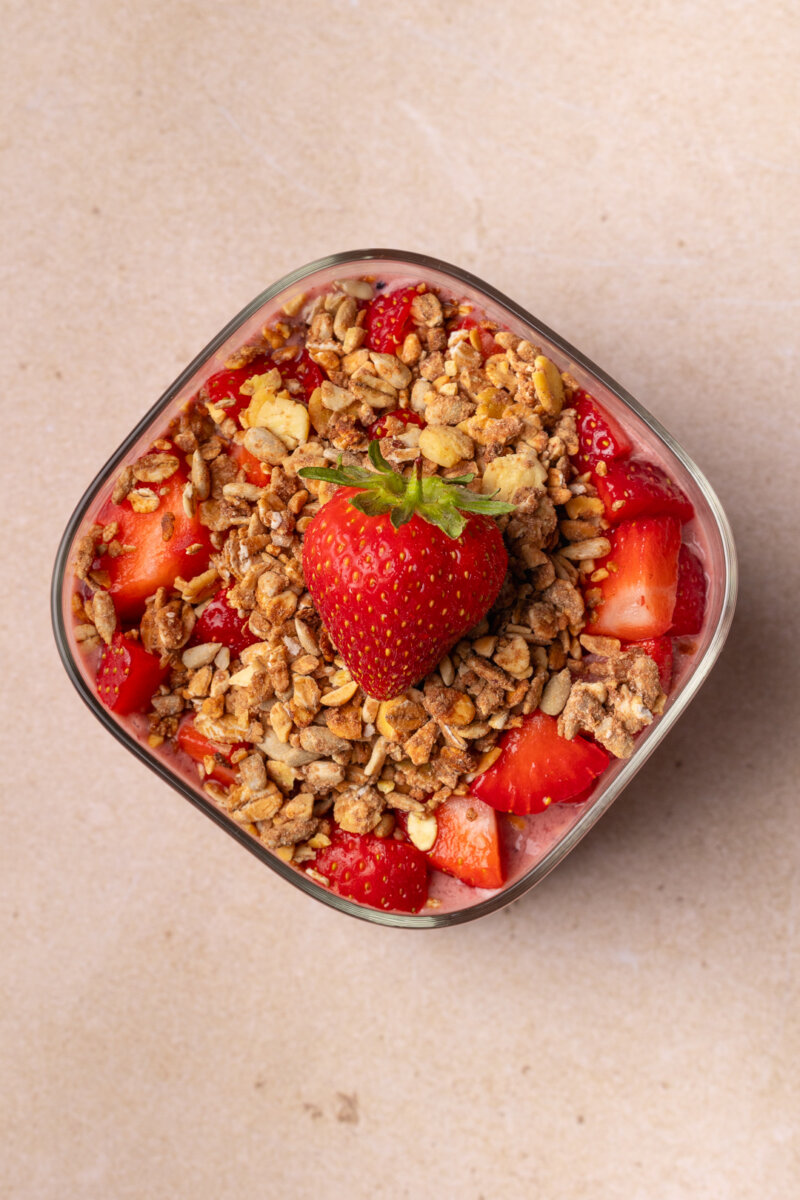
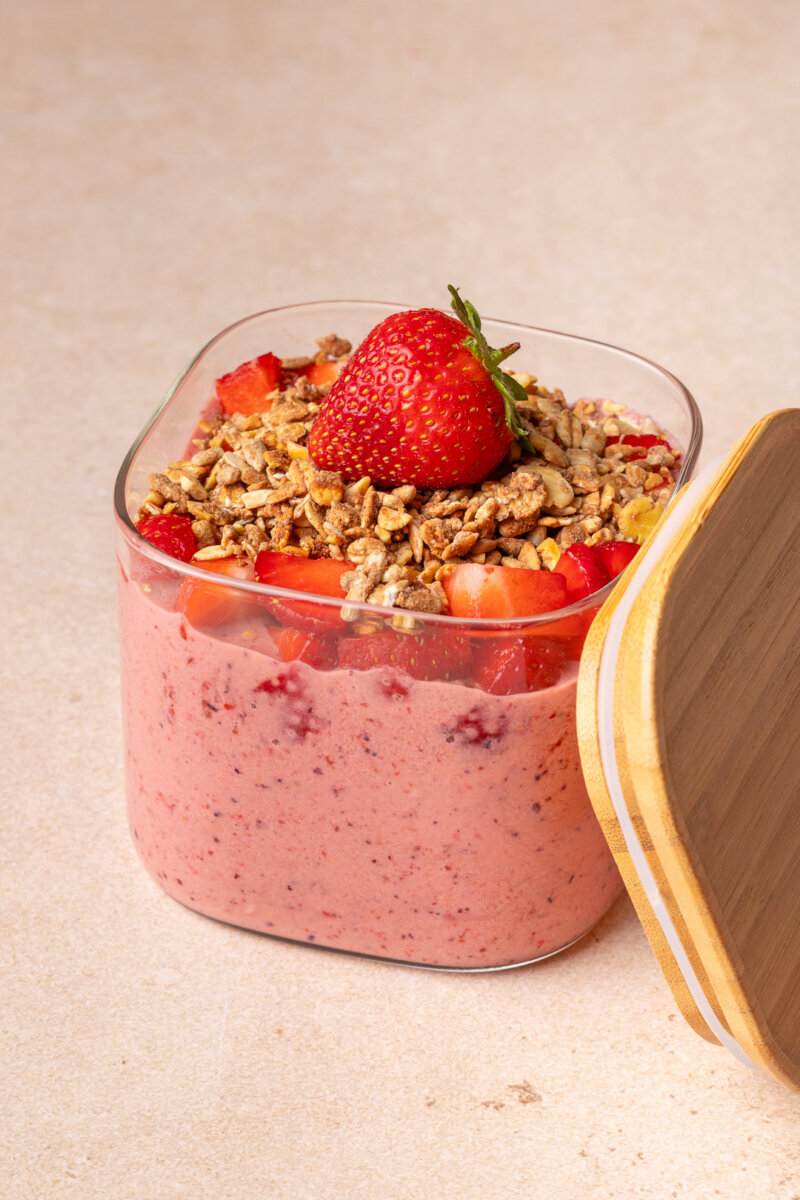
5 Prepped breakfast jar
Role: efficiency & scalability
Format: layered, pre-assembled
Use case: ready-to-sell, high-volume environments
Prepared in advance to reduce pressure during peak hours. Ensures consistent portioning, reduces food waste and supports multi-location operations.
Best for catering, travel, convenience, labour-constrained locations
What connects all formats
Despite the variety, the operational model stays simple:
- Same blending equipment
- Similar base preparation
- Minimal staff training required
- Easy to replicate across locations
The difference is not in complexity, but in how the base is used and presented.
| Format | What it delivers | Business impact | ||
|---|---|---|---|---|
| Smoothie | Speed | Handles peak volume | ||
| Smoothie bowl | Value | Increases ticket size | ||
| Spoonable smoothie | Balance | Boosts grab-and-go-sales | ||
| Frappé | Indulgence | Enables premium pricing | ||
| Prepped jar | Efficiency | Reduces pressure during rush |
The strength of this approach is not in offering more, but in building a system where each format has a clear function.
Final takeaway
Within this type of format-driven system, ingredients are selected based on how they perform across different output. Some bases are better suited for smooth, drinkable applications. Other hold texture better or work well in layered formats. The choice is less about the ingredient itself, and more about how it supports speed, consistency, and perceived value across formats.
For operators, the key is to select ingredients that can be used flexibly across multiple formats, without adding operational complexity.
Looking to structure your cold breakfast offer in a similar way?
We can help map this system to your menu and operations.



Rising ingredient costs, labour shortages, unpredictable consumer patterns, and persistent inflation are forcing every kitchen and purchasing department to rethink how value is created. One category quietly emerging as an economic booster is frozen fruit.

At Crop’s, we continuously refine our fruit mixes to help our partners serve the most flavourful, visually appealing, and high-quality smoothies possible. Innovation is in our DNA, ensuring every product not only meet expectations, but exceeds them.